



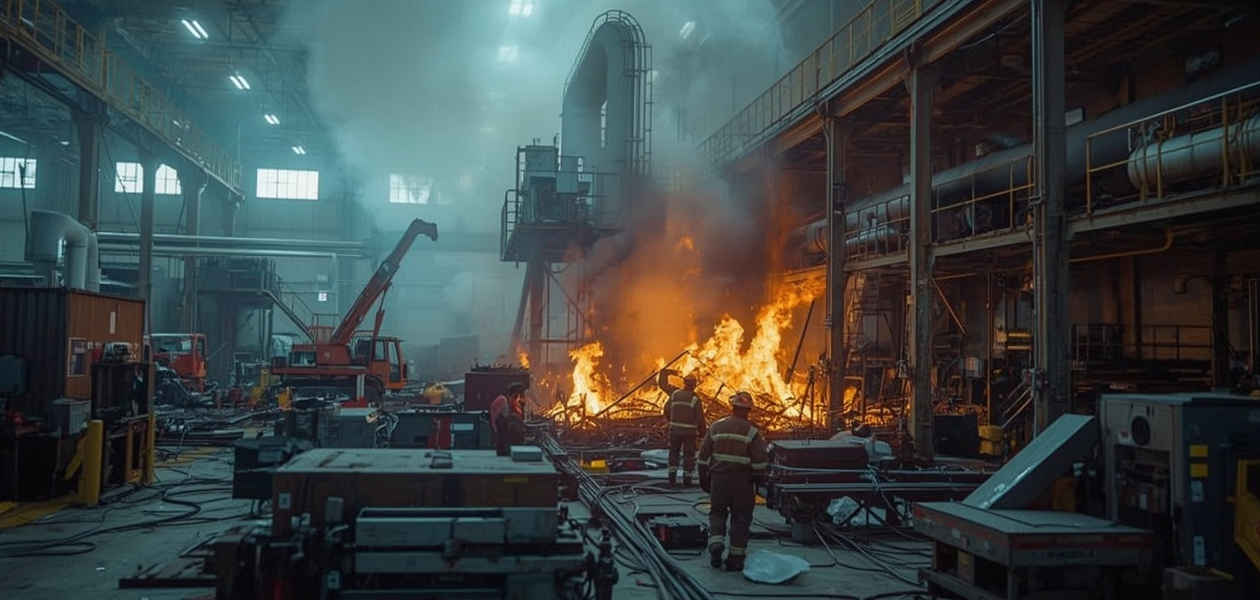
Accidents in industrial environments can have devastating consequences, injuries, fatalities, financial losses, and reputational damage. The good news? Every incident offers valuable lessons that can prevent future occurrences. By studying real-world case studies, companies and employees can understand what went wrong, why, and how to prevent it.
In this blog, we explore notable industrial accidents and the key takeaways that can make workplaces safer.
Case Study 1: Offshore Oil Rig Fire
The Incident
A major offshore oil rig in the Middle East experienced a fire due to a gas leak, causing extensive damage to equipment and a temporary halt in operations.
Lessons Learned
-
Regular inspection of pipelines and valves could have prevented the leak.
-
Fire detection and suppression systems were partially operational, highlighting the importance of full system checks.
-
Crew training in emergency response helped minimize injuries.
✅ Takeaway: Preventive maintenance and regular drills are critical in high-risk environments.
Case Study 2: Construction Site Scaffold Collapse
The Incident
A scaffold collapse at a high-rise construction site in India resulted in multiple worker injuries.
Lessons Learned
-
Proper load-bearing assessment and scaffolding setup were not followed.
-
Workers weren’t using personal fall protection equipment (PPE).
-
Lack of routine safety audits led to unnoticed hazards.
✅ Takeaway: Rigorous adherence to safety protocols and use of PPE saves lives.
Case Study 3: Chemical Plant Explosion
The Incident
A chemical plant in Europe faced an explosion due to improper storage of flammable chemicals.
Lessons Learned
-
Storage guidelines and labeling were ignored.
-
Workers were not trained to handle chemical spills correctly.
-
Emergency response plans were inadequate.
✅ Takeaway: Proper training, chemical management, and emergency planning are essential.
Case Study 4: Hospital Infection Outbreak
The Incident
An outbreak in a healthcare facility endangered patients and staff due to poor infection control practices.
Lessons Learned
-
Regular sanitation and sterilization procedures were ignored.
-
Staff lacked proper PPE training.
-
Visitor and patient screening protocols were insufficient.
✅ Takeaway: Even low-risk environments require consistent safety training and vigilance.
Key Lessons Across Industries
-
Training Saves Lives – Well-trained employees respond faster and more effectively.
-
Safety Equipment Is Critical – PPE, fire systems, alarms, and emergency kits must be functional.
-
Regular Audits Prevent Accidents – Routine inspections uncover risks before they escalate.
-
Compliance Cannot Be Ignored – International safety standards exist for a reason.
-
Continuous Improvement – Learn from past incidents and update safety protocols regularly.
Conclusion
Industrial accidents are unfortunate, but they are powerful learning opportunities. Companies that study incidents, invest in training, and maintain strict safety standards protect not only their workforce but also their operations and reputation.
🔥 Remember: Every lesson learned in safety is a life saved.